Tiki Hut Furniture Guide: Deep-Dive on Seating, Bars, Dining & Storage that Last Outdoors
Disclosure: Some links below are affiliate links. If you purchase through them, a small commission may be earned at no extra cost to you.
Furnishing a tiki hut isn’t the same as furnishing a covered patio. Wind skims the eaves, salt air works on hardware, and people circulate along the edges more than the center. This guide distills what works after hundreds of site visits:practical clearances, materials that age well, and category-by-category picks—from bar stools and dining sets to loungers, swings, benches, and storage. Use the navigation to jump to what you need, or read straight through when planning a new build.
Quick Navigation
- Layout & Circulation (by hut shape)
- Frames, Fabrics & Finishes that Last
- Lounge Seating (sofas, loveseats, sectionals, accent chairs)
- Bar & Counter Stools (heights, spacing, footrails)
- Dining Tables & Chairs (rectangular, round, benches)
- Chaise Lounges & Daybeds
- Hanging Chairs & Hammocks
- Coffee, Side & Console Tables
- Benches, Storage & Deck Boxes
- Folding, Stackable & Multi-Use Pieces
- Kid-Friendly Picks
- Cushions, Ties & Care
- Outdoor Rugs Under Furniture
- Maintenance Schedule (5-minute habits)
- Buying Checklist
- Ready-to-Shop Links
- FAQ
Layout & Circulation (by Hut Shape)
Good layouts feel effortless. Use these clearances and shape notes to keep walk paths open and views framed by the posts—not blocked by chair backs.
- Universal clearances: Walk path 36″ (30″ minimum). Coffee table to seat front: 14–18″. Chair-pushback behind dining: 24″ (30″ if shared aisle).
- Rectangular huts: Run lounge seating along the long axis; place dining near a short side. A 7′×10′ lounge bay fits loveseat + 2 chairs + 36–42″ table.
- Square/pyramid huts: Center a round or square dining table, and float two swivel chairs on the diagonal for conversation nooks.
- Tapered/irregular huts: Put deeper furniture (sofas/daybeds) on the widest side; use armless or bench seating on the narrow side to protect circulation.
- Bar lines: 24″ per stool; leave 10–12″ knee clearance (counter: 36″H with 24–26″ seats; bar: 42″H with 29–31″ seats). Keep 15″ from post/corner to first stool.
Frames, Fabrics & Finishes that Last
Salt, humidity and UV decide what survives. These materials consistently hold up under a tiki roof:
- Powder-coated aluminum: Rust-free and light. Textured bronze/brown hides scuffs and blends with posts.
- Resin wicker over aluminum: Low-maintenance “island” look. Choose UV-stabilized, tight weaves.
- HDPE/poly lumber: Color-through, heavy, handles sun and rain. Great for stools and dining where bump resistance matters.
- Teak or acacia: Warm tone with oil; silver patina if left natural. Add felt/rubber feet on pavers.
- Fabrics: Solution-dyed acrylic for cushions; textilene slings for fast-dry chairs. Stick with removable, zippered covers.
- Hardware: Stainless fasteners and foot glides; avoid bare steel. For sandy sites, add wider feet so chairs don’t sink at the edge.
Lounge Seating (Sofas, Sectionals, Accent Chairs)
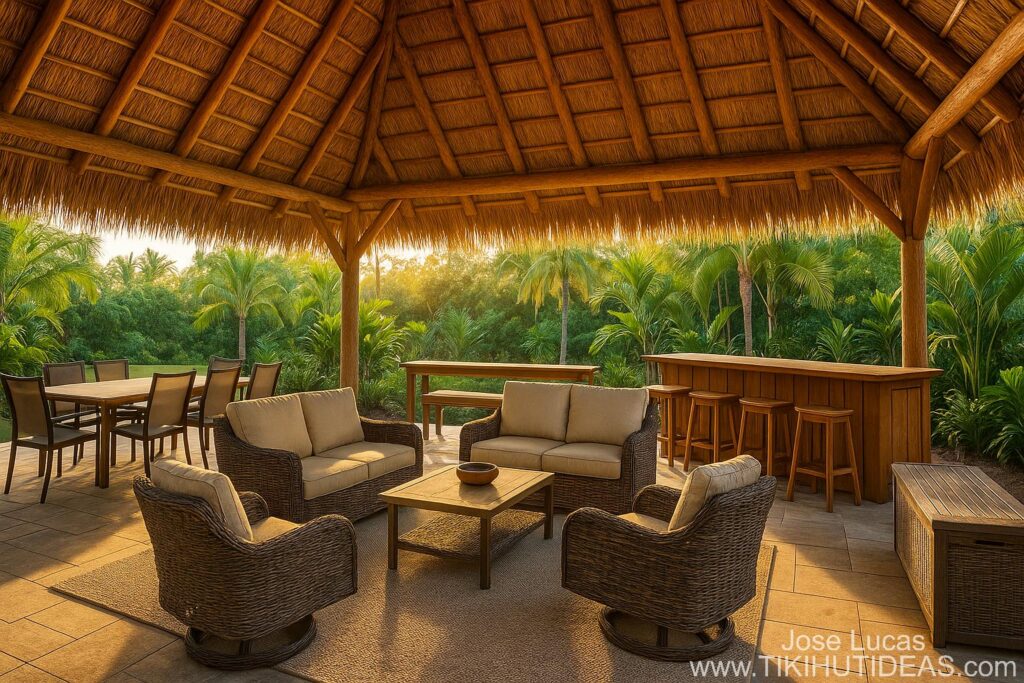
Most huts benefit from one “conversation bay.” If space is tight, two swivel rockers plus a compact loveseat are more flexible
than a big sectional. In wide huts, an L-sectional with a pair of stools at the return works well.
- Sofas/loveseats: Deep cushions are comfy but eat space. “Mid-depth” seats balance comfort and clearance.
- Accent chairs: Swivel rockers make re-orienting toward the view effortless. Armless chairs keep narrow bays open.
- Sectionals: Use modular sets so you can split into a sofa + chairs for parties.
Shop ideas:
• Resin wicker conversation sets
Bar & Counter Stools (Heights, Spacing, Footrails)
Get the height right first, then choose swivel vs. fixed based on wind exposure.
- Counter height: 36″ counter pairs with 24–26″ seats.
- Bar height: 42″ bar pairs with 29–31″ seats.
- Spacing: 24″ per stool (28″ with arms). Leave 15″ from a corner/post to the first stool.
- Materials: HDPE/poly stools shrug off abuse; aluminum frames keep weight down; resin wicker looks classic under thatch.
- Footrests: If the bar has no rail, pick stools with built-in rests for comfort.
Shop ideas:
Dining Tables & Chairs (Rectangular, Round, Benches)
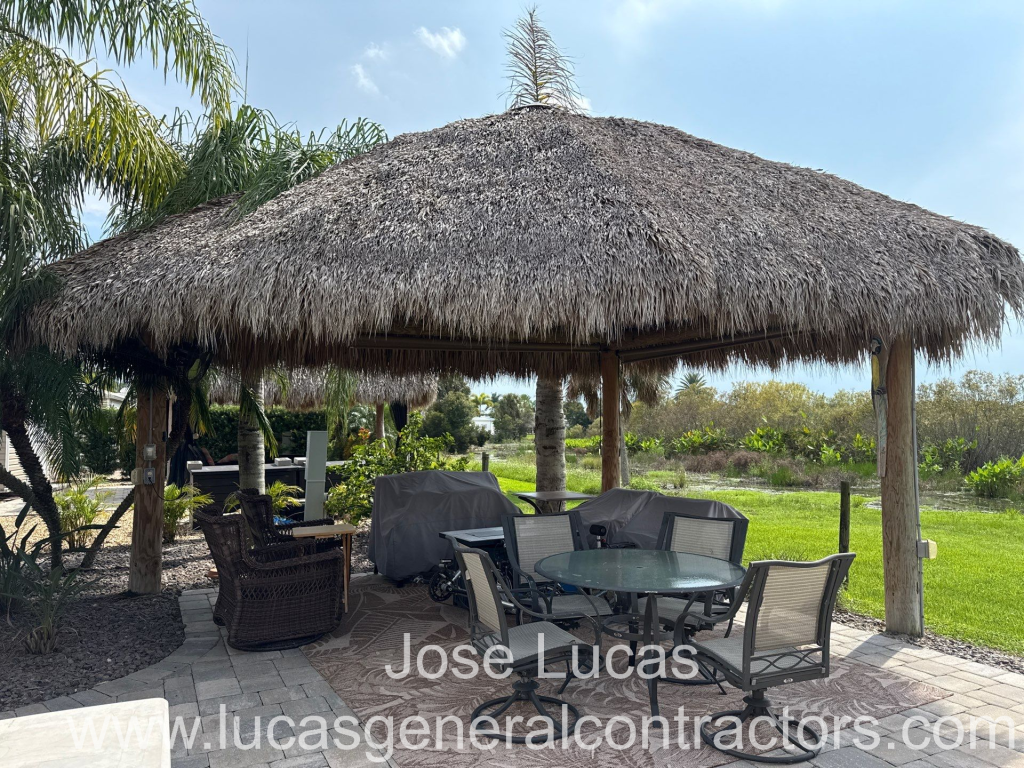
Dining works best when the table sits near a short side, with traffic flowing behind the chairs. Round tables are friendlier in tapered huts.
- Sizes: 72″×36″ seats six; 84″×40″ seats eight; 54–60″ round seats six (use armless chairs if space is tight).
- Chair types: Sling chairs dry fast; wicker armchairs feel luxurious for long dinners; benches add seats for kids.
- Tops: Slatted/perforated tops shed wind-blown rain; stone-look composites resist rings.
Shop ideas:
Chaise Lounges & Daybeds
Chaises are perfect on the leeward side where afternoon sun slips under the eave. For compact huts, consider a twin daybed with bolsters—it seats three by day and naps one at night.
- Chaises: Adjustable backs, textilene slings for quick dry, wheels for easy repositioning.
- Daybeds: Choose ventilated bases and removable cushions; keep at least 24″ walkway around the exposed edge.
Shop ideas:
Hanging Chairs & Hammocks
Hanging pieces are great under tall bays. Mount only to structural members—rafters or dedicated hang points—not to thatch elements.
Leave 30–36″ swing clearance and 18″ behind for comfortable entry/exit.
Shop ideas:
• Hammock chair + stainless hanging kit
Coffee, Side & Console Tables
Two small side tables beat one oversized coffee table in tight bays. A console table behind a loveseat acts as a serving shelf without widening the footprint.
Shop ideas:
Benches, Storage & Deck Boxes
Storage keeps cushions and throws ready without clutter. Place a bench behind the bar return or along the shortest side so it doesn’t pinch the walkway.
Shop ideas:
Folding, Stackable & Multi-Use Pieces
For party nights, folding bistro chairs, nesting side tables, and stackable stools expand seating without permanent clutter.
Shop ideas:
Kid-Friendly Picks
Low benches, small resin tables, and washable floor cushions make a corner feel like a mini cabana. Round off sharp corners near traffic paths.
Shop ideas:
Cushions, Ties & Care
- Fabric: Solution-dyed acrylic resists fading; removable covers simplify rinsing and sun-drying.
- Fill: Quick-dry foam or polyfill with vented bottoms; avoid foam that traps water.
- Ties/Velcro: Tie down cushions near the eave; breezes find those edges first.
- Storage: Use a deck box in storm season; frames can usually stay.
Shop ideas:
• Solution-dyed acrylic covers
• Weather-resistant throw pillows
Outdoor Rugs Under Furniture
Rugs anchor a seating group and soften the echo. Choose low-pile, hose-off designs; size so all front chair legs sit on the rug.
In sandy sites, patterned weaves hide footprints better than solids.
Shop ideas:
Maintenance Schedule (5-Minute Habits)
- Monthly: Rinse frames, wipe armrests and table tops, brush sand from glides, stand cushions in the sun for an hour.
- Quarterly: Tighten hardware, swap any rusty screws for stainless, refresh wood oil if you keep a warm tone.
- Storm prep: Stow cushions, group chairs against the heaviest table, and remove umbrellas or freestanding decor.
Buying Checklist
- Confirm counter (36″) vs bar (42″) height before ordering stools.
- Measure pushback zones behind dining chairs (24–30″).
- Pick frame material to match exposure: aluminum/HDPE for salty wind; resin wicker for classic look; teak/acacia for warm wood.
- Choose cushion fabric that can be rinsed and sun-dried; order a few spare covers for heavy-use seats.
- Add felt/rubber feet and a deck box to every order—small accessories that save surfaces and storage headaches.
Ready-to-Shop Links
- Lounge conversation sets (resin wicker)
- Aluminum lounge sets
- Modular sectionals
- Bar-height stools • Counter-height stools
- Six-seat dining sets • HDPE/poly sets • Round tables
- Textilene chaise lounges • Daybeds
- Hanging egg chairs • Hammock chair kits
- Coffee tables • Side tables • Console tables
- Storage benches • Resin deck boxes
- Stackable chairs • Folding bistro chairs • Nesting tables
- Solution-dyed acrylic covers • Throw pillows
- Outdoor rugs (polypropylene)
- Chair/table feet pads
Match sizes to your measured bays before ordering; verify finish colors in natural light.
FAQ
What color palette works best under thatch? Earth tones—sand, bronze, wood, lagoon blue, deep green. Use patterned pillows on otherwise solid seating to keep the focus on the roof line.
Can I use a fire pit under a tiki roof? Avoid open flame or high-heat units under thatch. If you add heat, use low-output electric heaters placed safely away from the roof and posts.
Will wood furniture last? Yes, with seasonal oiling and airflow. Expect graceful patina if left natural; oil to keep the warm tone.
Planning the whole space? Browse the Design Albums for footprints that fit these layouts,or Get a Quote when you’re ready to build or expand.
For style accents, see Décor ideas.