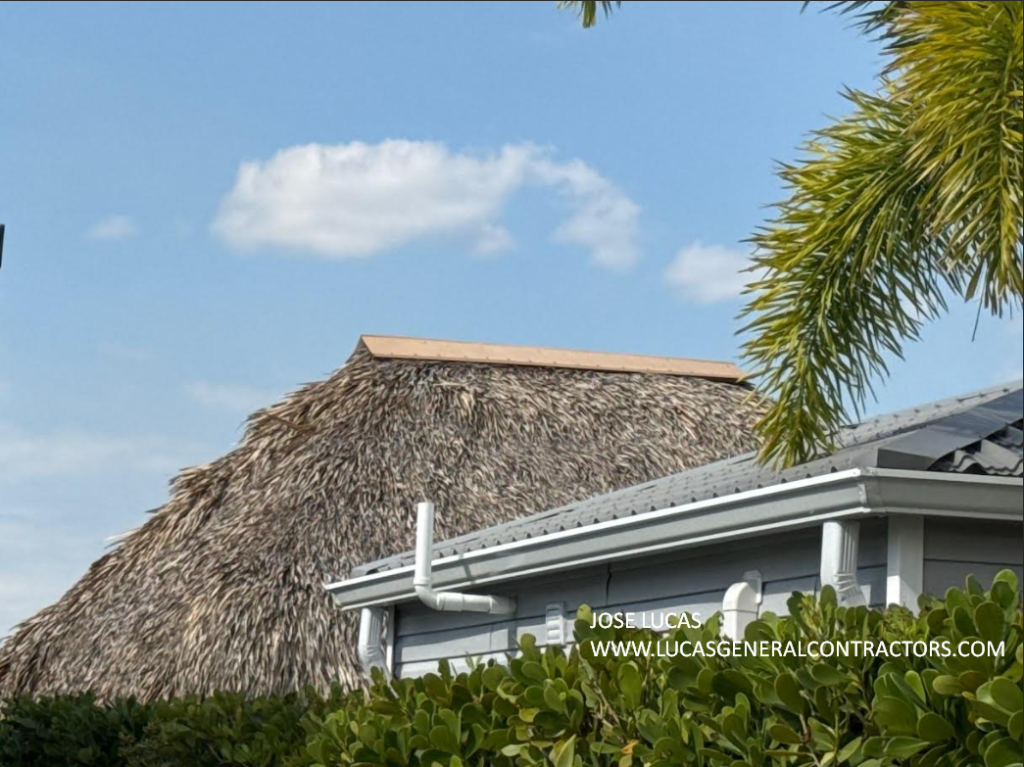
Polynesian Ridge Vent — Natural Stack-Vent for Tiki Huts
This detail is a Polynesian ridge vent: a raised, thatched cap at the roof peak that lets hot air escape while
shedding rain. The open cavity under the cap creates a natural stack effect—warm air rises and exits at the top, pulling cooler air in at the eaves for constant, passive ventilation.
What It Does
- Drops heat fast: Releases the hottest air trapped under the roof, especially at mid-day.
- Reduces humidity buildup: Helps dry morning dew and mist under the thatch layer.
- Improves comfort: Works with ceiling fans to move air across seating zones.
- Protects the roof: Vented apex lowers moisture load inside the roof assembly.
Best Use Cases
- Large pavilions or tall hip/pyramid roofs where peak heat collects.
- Huts with side curtains or roll-downs that trap warm air on still days.
- Bar/kitchen huts (ambient heat) where extra ventilation helps comfort.*
- Humid/tropical sites that benefit from constant passive drying.
*Always keep grills or open flame out from under thatch and follow appliance clearances.
Typical Construction
- Cap frame: light rafters or hoops forming an elevated ridge “hood.”
- Vent gap: continuous slot along the peak under the cap (height typically 4–8″, sized to roof area and wind exposure).
- Finish: natural or synthetic thatch on the cap; layered laps to shed rain.
- Under-cap protection (optional): insect mesh/bird guard; peel-and-stick membrane on the peak boards; hidden rain baffle for windy sites.
- Fixings: exterior-rated ties/clips; fasteners concealed where possible.
Variations
- Low-profile cap for subtle roofs and calmer sites.
- Taller “Polynesian” cap for maximum exhaust on big pavilions.
- Screened vent (316 SS or bronze mesh) to keep small pests out.*
- Synthetic thatch cap for long-life commercial use.
*Choose mesh with adequate free area so airflow isn’t choked.
Layout & Install Tips
- Keep a continuous opening along the ridge; avoid blocking with solid boards.
- Balance with generous eave intakes so air can enter low and exit high.
- Align cap laps to the prevailing rain so water sheds off the vent faces.
- Maintain safe clearances around any fans or lighting near the peak.
- Size connections and cap framing per wind zone; verify details with the architect/engineer of record.
A Polynesian ridge vent gives a tiki hut the classic profile and real performance—cooler, drier, and more comfortable,
with no power required. It pairs perfectly with eave-mounted misters and low-profile ceiling fans for all-day comfort.