Tiki Hut Ceiling Fans (with and without Lighting): What Works, What Lasts
Disclosure: Some links below are affiliate links. If you purchase through them, a small commission may be earned at no extra cost to you.
Over hundreds of tiki builds and site visits, we’ve seen a clear pattern: the ceiling fans that survive sun, splash, salt air, and thatch heat share the same traits—outdoor rating, corrosion-resistant hardware, balanced blades, and simple controls. This guide focuses on practical choices for tiki hut ceiling fans with lighting and without lighting, plus size/height tips so air actually moves where people sit.
- Outdoor Ratings: Wet vs. Damp (choose correctly)
- Sizing & Mounting Height for Tiki Huts
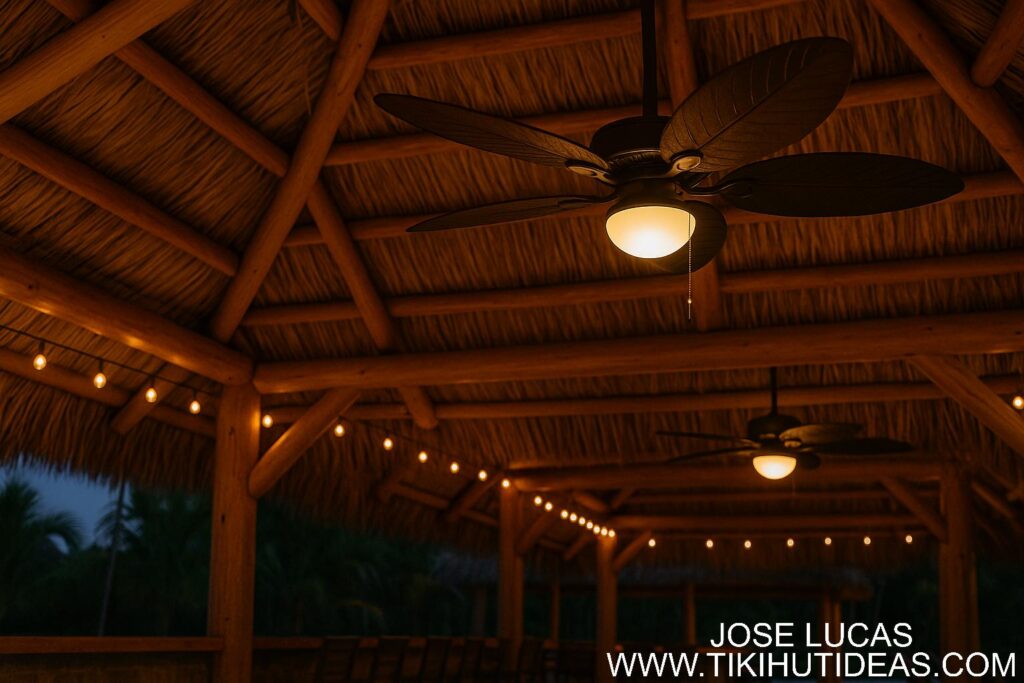
- Ceiling Fans with Lights (best use cases)
- Fans Without Lights (high airflow options)
- Blade Styles: Tropical look that actually holds up
- Controls: Remote, wall, and smart timers
- Recommended Searches (wet-rated, low-profile, large-diameter, smart)
- Install & Care: Things that extend fan life
Outdoor Ratings: Wet vs. Damp
In an open-air tiki, rain and wind can blow through. That makes WET-rated fans the safe default. DAMP-rated units are fine for
enclosed lanais or bars where water never directly reaches the fan. When in doubt, pick wet-rated—gaskets, sealed motor housings, and finishes are designed for splash.
- Wet-rated: OK for direct rain and wash-down; best for open huts and coastal sites.
- Damp-rated: Covered, no direct water. Works in deep roof bays protected from wind-driven rain.
Sizing & Mounting Height for Tiki Huts
Airflow comfort comes from blade diameter, mounting height, and how many units you use. What we’ve seen work:
- Diameter by zone: 44–52″ for 8–10′ seating nooks; 56–60″ for 12–14′ bays; 65–72″ for large pavilions. For very large spans, multiple fans beat one huge unit.
- Blade height: Target 8–9′ above the floor (or deck). Use a downrod if your ridge is high; use a low-profile “hugger” if the eve is low.
- Spacing: If using two or more, center each fan over the occupied zone. Keep at least 24″ blade tip clearance from rafters/thatch for clean air draw.
- CFM focus: Numbers vary by brand, but for open huts we favor high-CFM DC-motor fans (quiet, efficient) with a medium blade pitch (12–15°).
Ceiling Fans with Lighting: When They Make Sense
A fan with an integrated light is handy over dining tables, card tables, or bars where you want an overhead “task” spot. Look for sealed LED modules with
warm color (2700–3000K), a diffused lens, and a controllable dimmer so the light can fade once the evening gets going.
Useful searches to compare models:
Wet-rated 52″ fans with lighting •
Low-profile (hugger) wet-rated with light •
DC-motor, wet-rated with remote
High-Airflow Fans (No Light)
If the hut already has under-beam lighting, skip the light kit and prioritize airflow. Large-diameter, wet-rated fans with efficient DC motors are quiet and move serious air without glare.
Compare options here:
72″ wet-rated DC fans •
60″ wet-rated fans •
Coastal/salt-air finishes
Blade Styles: Tropical Look that Holds Up
The “tropical leaf” look is popular, but not every leaf-style blade is built for weather. We’ve had the best luck with ABS/composite blades that mimic palm fronds yet stay balanced in humidity. Natural reed or wood blades are beautiful but typically rated for damp (not wet) locations—great under deep roof protection, not in wind-driven rain.
- ABS/composite tropical blades: weather-stable, easy to clean.
- Metal blades: modern look, high airflow; choose salt-resistant coatings near the coast.
- Natural leaf/wood: check rating carefully—most are damp-only.
Explore these styles:
Tropical-style wet-rated •
ABS/composite blade models
Controls: Remote, Wall, and Smart Timers
Separate the fan and the light on different buttons if you can. A remote is convenient for huts; a wall control works well when there’s a nearby post. If you prefer hands-off, a weather-rated smart plug on the light circuit plus a wall-mounted fan control keeps things on schedule without rewiring.
Helpful searches:
Universal outdoor fan remote kits •
Wall controls (outdoor boxes) •
Weather-rated smart plug/timer
Recommended Searches by Scenario
- Low eaves / shallow huts:
Low-profile wet-rated fans - Dining table under the fan:
Fans with warm integrated lights - Large pavilion (14′+ bays):
72″ DC wet-rated models - Coastal / salt air:
Salt-resistant finishes - Traditional tiki look (leaf blades):
Leaf-style, outdoor-rated
Install & Care: Small Details that Make a Big Difference
- Mounting box: Use an outdoor-rated, fan-rated box secured to framing (beam or dedicated block). Avoid attaching through thatch.
- Clearances: Keep blades at least 24″ from thatch and rafters; target 8–9′ above floor for best feel.
- Hardware: Stainless or hot-dip galvanized fasteners; add anti-seize where salt air is common.
- Lighting color: 2700–3000K is comfortable; dim the light after dinner and let your ambient lighting carry the mood.
- After storms: Rinse salt spray, check blade screws, and re-sync remotes if power flickered.
- Electrical: Use GFCI-protected circuits and outdoor boxes/covers. Hire a licensed electrician for line-voltage work.
Planning more upgrades? Browse our Design Albums for layout ideas
or see our guide to tiki hut lighting to round out your setup.
Safety note: Always follow local codes and manufacturer instructions. A licensed electrician should handle any line-voltage wiring.